
Setting Up Freshwater Aquariums Made Easy

Updated: Aug 12
Setting up an aquarium can be one of the most rewarding experiences. Watching your fish swim peacefully in a well-maintained tank brings a sense of calm and joy. But if you’re new to this hobby or even if you’ve been at it for a while, the process of setting up aquariums can sometimes feel overwhelming. That's why we suggest picking out your dream fish first, the center piece. Do some research about your fish and then pick your tank from there. By building an aquarium around your fish rather than buying a tank first, you prevent common pitfalls like buying a tank that's too small, getting weak filters, or mixing fish with incompatible water requirements.
Here is how to turn your choice of fish into your exact tank specifications:
1.Select your 'centerpiece' fish:.
Pick the main species you are most excited about (e.g., Angelfish, Betta, Neon Tetras, Cichlids, or Dwarf Gouramis). Everything else in the tank from tank dimensions to temperature will revolve around this choice.
2.Determine minimum tank dimensions:
Look at adult size and swimming style, not just current size:
Active horizontal swimmers (like Danios or Rainbowfish) need long tanks for runway space.
Tall-bodied fish (like Angelfish or Discus) need high/tall tanks so their fins don't drag.
Territorial bottom-dwellers (like Cichlids) care about footprint area rather than volume.
3.Match water parameters & temperature:.
Note your fish’s preferred pH, water hardness (GH/KH), and temperature range.
Tropical warm-water species (e.g., Discus, 82–86°F) need strong heaters.
Temperate species (e.g., White Cloud Minnows or Hillstream Loaches) thrive in unheated tanks with high flow.
4.Size the filtration to bioload:
Heavy eaters or high-waste species (like Goldfish, Plecos, or Cichlids) require filters rated for 2x the actual tank size (e.g., a filter rated for 60 gallons on a 30-gallon tank). Light-bioload schooling fish can use standard sponge or hang-on-back filters.
5.Choose substrate & aquascape decor:
Soft-bodied or burrowing fish (Corydoras catfishes, Kuhli loaches) require smooth sand to protect sensitive barbels.
Shy prey species require heavy planting, drift wood, or caves for hiding.
Plant-eaters (Silver Dollars, large Cichlids) do best with hardscapes (rocks/wood) rather than live plants.
Taking the time to plan these basics carefully will save you headaches later. Remember, patience is key when setting up aquariums. Rushing can lead to problems like algae blooms or stressed fish.

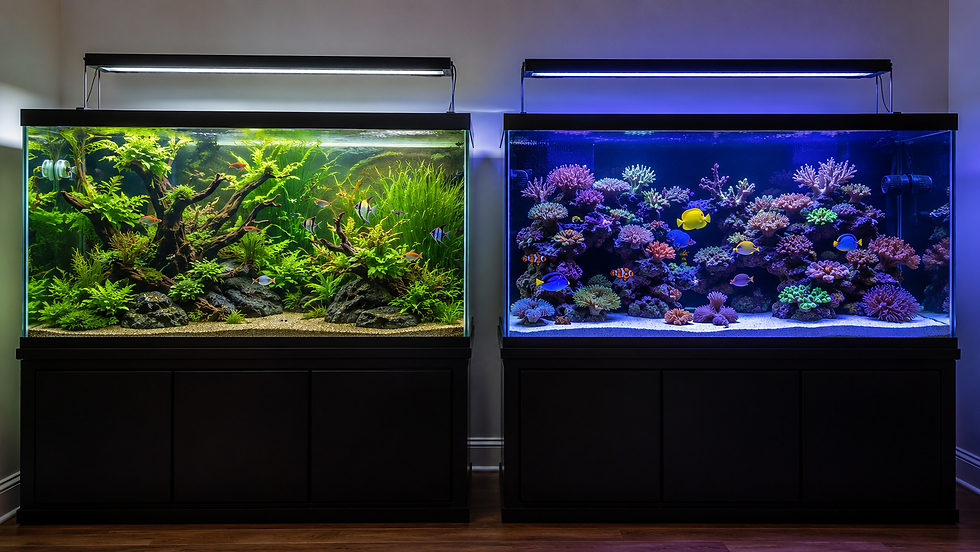
Photo provided by Nix Eyraud at Dallas North Aquarium
What are the best beginner centerpiece fish and compatible tankmates for a 10 to 30 gallon setup?
For a 10 to 30-gallon tank, the goal is to choose a centerpiece fish with a calm personality that won't bully smaller tankmates, then build out the community using fish that occupy different "zones" (top, middle, and bottom).
Here are four top beginner-friendly centerpiece setups categorized by tank size, complete with their ideal community.
1. The Honey Gourami Setup
Best Tank Size: 10 to 20 Gallons
Care Level: Very Easy
Why it works: Unlike aggressive Dwarf Gouramis or territorial Bettas, Honey Gouramis are extraordinarily peaceful. They have bright sunset-yellow coloration and spend their time exploring the upper-to-middle layers of the tank.
Role | Species | Quantity | Notes |
Centerpiece | Honey Gourami (Trichogaster chuna) | 1 | Calm, inquisitive, uses labyrinth organ to breathe air. |
Mid-Water School | Ember Tetras or Chili Rasboras | 6–8 | Tiny, bright orange/red nano fish that stay out of the Gourami's way. |
Bottom Dwellers | Pygmy Corydoras | 6 | Adorable bottom scavengers that need a smooth sand substrate. |
Clean-up Crew | Nerite Snail or Amano Shrimp | 1–2 | Excellent algae eaters. |
Pro Tip: Keep the water current gentle using a sponge filter or adjustable hang-on-back filter, as Gouramis dislike turbulent water.
2. The Placid Betta Setup
Best Tank Size: 10 to 15 Gallons
Care Level: Easy
Why it works: Male Bettas make iconic centerpieces. While they cannot live with other Bettas or long-finned fish, they can share a tank with short-finned, fast-moving, non-flashy species in a well-planted tank.
Role | Species | Quantity | Notes |
Centerpiece | Male Betta (Betta splendens) | 1 | Pick a calm individual (avoid keeping him with brightly colored fish). |
Mid-Water School | Harlequin Rasboras | 6 | Fast, short-finned, peaceful schoolers that ignore the Betta. |
Bottom Dwellers | Kuhli Loaches | 3–4 | Eel-like scavengers that only come out to forage on the substrate. |
Clean-up Crew | Mystery Snail | 1 | Safe from Bettas due to their hard shells. |
Pro Tip: Plant heavily with live plants like Java Fern and Anubias. Tall plants break line-of-sight, keeping the Betta relaxed.
3. The Bolivian Ram Setup
Best Tank Size: 20 Long to 30 Gallons
Care Level: Easy-Intermediate
Why it works: If you want a Cichlid with big personality, Bolivian Rams are far heartier and less aggressive than German Blue Rams or larger Cichlids. They hover near the lower-middle section of the tank displaying shimmering pastel colors.
Role | Species | Quantity | Notes |
Centerpiece | Bolivian Ram (Mikrogeophagus altispinosus) | 1 or Single Pair | Peaceful dwarf cichlid that sifts through substrate. |
Mid-Water School | Rummy-Nose Tetras or Neon Tetras | 8–10 | Tightly-schooling fish that provide constant, graceful movement. |
Bottom Dwellers | Panda Corydoras | 6 | Active, cute bottom-dwellers that share the floor peacefully. |
Clean-up Crew | Bristlenose Pleco | 1 | Maxes out around 4–5", unmatched at eating glass algae. |
4. The Pearl Gourami Showcase
Best Tank Size: 29 to 30 Gallons
Care Level: Very Easy
Why it works: Pearl Gouramis grow to about 4–5 inches, making them true "showcase" centerpiece fish. They feature intricate lace-like patterns and deep orange throats when mature.
Role | Species | Quantity | Notes |
Centerpiece | Pearl Gourami (Trichopodus leerii) | 1 (or 1 male + 1 female) | Gentle giant of the nano-to-medium tank world. |
Dither School | Cardinal Tetras or Zebra Danios | 8–10 | Active, hardy, and vivid in color. |
Bottom Dwellers | Sterbai Corydoras | 6 | Tougher, heat-tolerant Corydoras species. |
Clean-up Crew | Amano Shrimp | 3–4 | Must be full-grown so the Pearl Gourami doesn't mistake them for food. |
General Rules for Stocking Success
Avoid Overcrowding: Introduce the schoolers first, let the tank's biological filter adjust for 2 weeks, and introduce your centerpiece fish last so it doesn't instantly claim the whole tank as its territory.
Layer the Food: Feed floating flakes or small pellets for your centerpiece and schoolers, but always drop sinking algae wafers or shrimp pellets at night for bottom-dwellers like Corydoras or Plecos.
Use Sand Substrate: If your setup includes Corydoras catfish or Loaches, use smooth aquarium sand. Rough gravel can erode their delicate facial barbels.
Maintaining Your Aquarium for Long-Term Success
Once your aquarium is set up, the work doesn’t stop. Regular maintenance keeps your fish healthy and your tank looking great. Here’s what to keep in mind:
Weekly Water Changes: Replace 10-20% of the water weekly to remove waste and replenish minerals.
Monitor Water Parameters: Use test kits to check pH, ammonia, nitrite, and nitrate levels.
Clean the Tank and Equipment: Remove algae from glass, clean filters, and check pumps.
Feed Properly: Overfeeding can pollute water. Feed small amounts once or twice a day.
Watch Your Fish: Look for signs of stress or illness and act quickly if needed.
Keeping a maintenance schedule helps you catch problems early and enjoy a healthy, beautiful aquarium for years.
Comments