
Why a 75-Gallon Aquarium Is the Best All-Around Tank for Freshwater and Saltwater Hobbyists

Updated: Aug 12
Why a 75-Gallon Aquarium Is the Best All-Around Tank for Freshwater and Saltwater Hobbyists
Ask a group of aquarium hobbyists what the "perfect" tank size is, and you're almost guaranteed to hear a different answer from everyone in the room.
Some enjoy the challenge of nano aquariums, while others believe that bigger is always better. But when it comes to finding a balance between stability, flexibility, cost, and long-term enjoyment, one size consistently stands out: the 75-gallon aquarium.
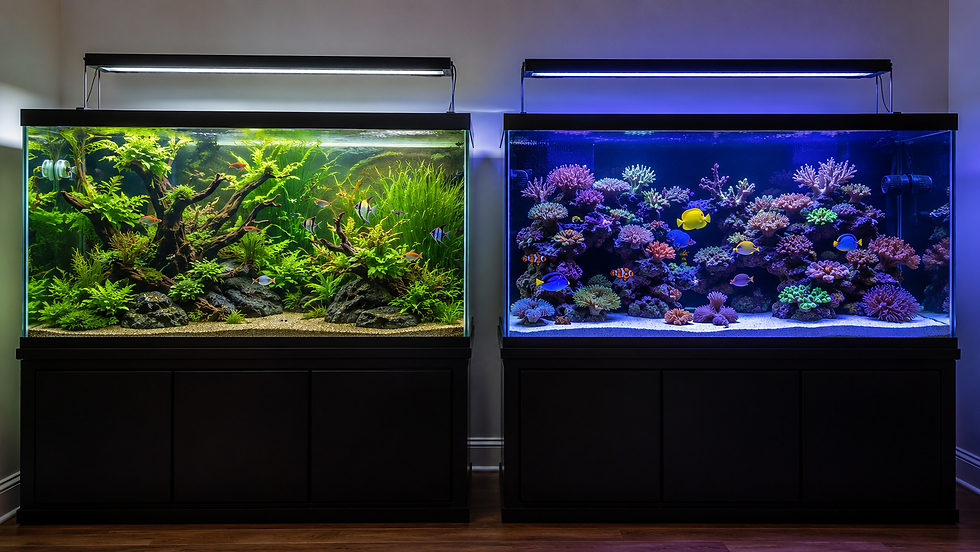
Large enough to offer countless stocking possibilities yet small enough to fit comfortably in most homes, a 75-gallon tank has earned a reputation as one of the most versatile aquariums available. Whether the goal is a lush planted freshwater display or a thriving saltwater reef, it provides an excellent foundation for both.
Why a 75-Gallon Aquarium?
Many beginners assume smaller aquariums are easier to care for, but experienced fish keepers often know the opposite is true.
In smaller tanks, water conditions can change quickly. Overfeeding, missed maintenance, or equipment failures can have a much greater impact because there's less water to dilute those changes. A larger aquarium provides more stability, giving both fish and hobbyists a little more breathing room when the unexpected happens.
The dimensions of a standard 75-gallon tank are another major advantage. At four feet long, it offers plenty of horizontal swimming space, which is far more important to most fish than extra height. That additional length allows for larger schools of fish, more natural behaviors, and more creative aquascaping.
It also strikes a practical balance between size and maintenance. It's large enough to create an impressive display without becoming overwhelming to care for.

Hatchetfish
A Classic Freshwater Community
For freshwater enthusiasts, few setups are as timeless as a planted South American community aquarium.
Large schools of colorful tetras moving through dense greenery create constant movement, while Corydoras quietly patrol the bottom in search of food. Add a pair of German Blue Rams, and the aquarium gains a vibrant centerpiece without sacrificing its peaceful atmosphere.
A well-balanced stocking list might include:
20–30 Cardinal Tetras
12 Corydoras Catfish
A pair of German Blue Rams
One Bristlenose Pleco
Six Hatchetfish
Six Marbled Pencilfish
The aquascape can be completed with hardy plants such as Amazon Swords, Java Fern, Anubias, Cryptocoryne, and a few floating plants to create a natural, shaded environment.
The result is an aquarium that feels alive from top to bottom while remaining peaceful and easy to enjoy.
Other Freshwater Possibilities
One reason the 75-gallon aquarium remains so popular is its versatility.
Those who prefer larger centerpiece fish can build a community around a pair of Angelfish, accompanied by Rummy Nose Tetras and Corydoras.
Aquarists looking for constant activity often gravitate toward Rainbowfish, whose bright colors and energetic personalities make them one of the hobby's most underrated groups of fish.
For hobbyists interested in bold personalities and fascinating social behavior, an African cichlid aquarium filled with Mbuna offers an entirely different experience. Instead of lush plants, these aquariums rely on rock formations and caves to recreate their natural habitat.
P

Purple firefish
An Excellent Choice for Saltwater
The same qualities that make a 75-gallon aquarium successful for freshwater also make it an outstanding starting point for saltwater.
Many experienced reef keepers consider the 75- to 90-gallon range the sweet spot because it offers improved water stability while remaining manageable in terms of equipment costs and routine maintenance.
A balanced fish community might include:
A pair of Ocellaris Clownfish
Yellow Watchman Goby
Royal Gramma
Firefish
Tailspot Blenny
Kole Tang
Pair of Banggai Cardinalfish
Adding a cleanup crew of snails and cleaner shrimp helps maintain the aquarium while contributing additional activity and interest.
Choosing Corals
One of the most rewarding aspects of reef keeping is watching corals grow and mature over time.
Many successful reef aquariums begin with hardy species such as Zoanthids, Mushroom Corals, Toadstool Leather Corals, and Duncan Corals. As the aquarium becomes more established, many hobbyists expand into Hammer, Frogspawn, and Torch Corals before eventually experimenting with more demanding SPS species.
Building a reef slowly often produces healthier corals and a more stable aquarium in the long run.

Equipment That Makes a Difference
Reliable equipment can make maintaining an aquarium much easier.
For freshwater systems, a quality canister filter, dependable heater, strong LED lighting, and fine sand substrate provide an excellent starting point. Hobbyists interested in growing demanding aquatic plants may also consider adding a CO₂ system later.
Saltwater aquariums benefit from a sump, protein skimmer, auto top-off system, reef-quality lighting, and an RO/DI water filtration system. While these additions increase the initial investment, they often simplify long-term maintenance and improve overall stability.
Freshwater or Saltwater?
Choosing between freshwater and saltwater ultimately comes down to personal preference.
Freshwater aquariums generally cost less to set up, require simpler equipment, and offer a more forgiving learning curve.
Saltwater aquariums require a larger investment and more attention to water chemistry, but they reward hobbyists with colorful marine fish, vibrant corals, and the opportunity to recreate one of nature's most fascinating ecosystems.
Neither choice is inherently better—each offers its own unique experience.
Final Thoughts
For anyone searching for a single aquarium that offers flexibility, stability, and room to grow within the hobby, the 75-gallon aquarium remains one of the strongest recommendations available.
It provides enough space to build a peaceful planted freshwater community, an active Rainbowfish display, an African cichlid aquarium, or even a beautiful mixed reef. It offers stability without becoming difficult to maintain and opens the door to a wide range of fish and coral species.
While no aquarium is perfect for every situation, the 75-gallon comes remarkably close. It's large enough to grow with the hobbyist, forgiving enough for those still learning, and versatile enough to remain enjoyable for many years.
For those planning a long-term aquarium, few sizes offer as much potential as a well-designed 75-gallon tank.

Comments